
Eastern Standard
In the South and beyond, chefs chase the quiet obsessiveness of japanese kitchens
By Carrie Honaker
At 36 degrees north, the air tastes the same. In Tokyo, it carries salt from the Pacific. In Nashville, smoke from hickory and oak. Two cities bound by a line of latitude and a shared devotion to craft—each obsessed with the poetry of the everyday.
Every spring, cherry blossoms open along the Cumberland River, their pink petals reflected in the water. Nashville planted them—over a thousand trees—in honor of its sister city, Kamakura. The geography has made room for Japan. But it’s the kitchens that keep the connection alive.
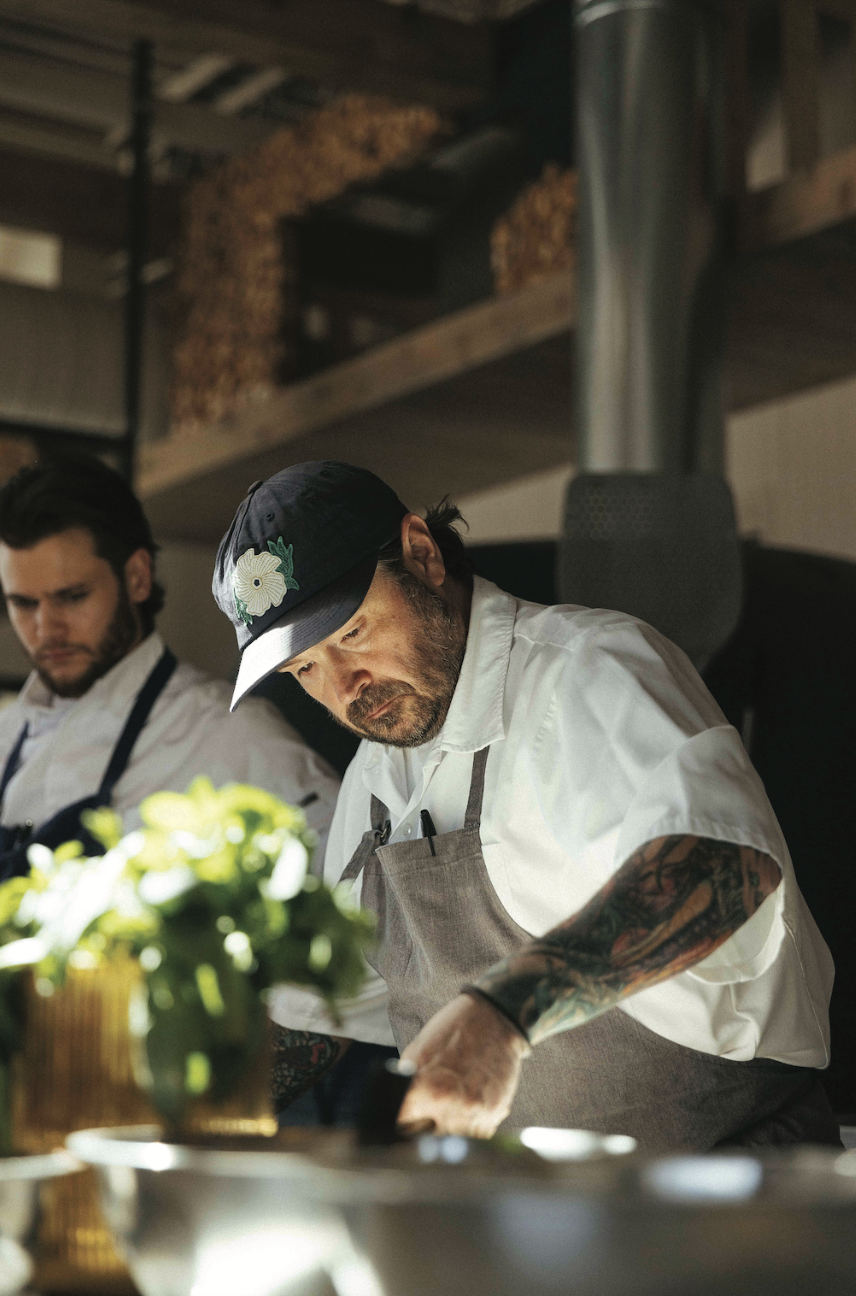
At Nashville’s Sho Pizza Bar, Chef Sean Brock directs his discipline to the task at hand, connecting with diners through the stories behind his food; photograph by Minnie Morklithavong.
Inside Sho Pizza Bar, James Beard Award–winning chef Sean Brock tosses coarse salt onto the deck of a wood-fired oven before sliding in a round of dough. “How do you improve upon tradition without disrespecting it? Focus on every detail. Make sure the dough is perfect every single time it hits the marble to be stretched,” he says. Across town at Otaku Ramen, a pot of pork broth trembles on the verge of boiling, building deep flavor. And in East Nashville, the 14-seat counter at Kase x Noko glows like a lantern, each piece of nigiri brushed with quiet care.
From pizza to ramen to sushi, the forms differ, but the language is the same—discipline, patience, grace. The invisible thread between Japan and Tennessee hums in these rooms, carried through salt, smoke, and the steady rhythm of hands at work.
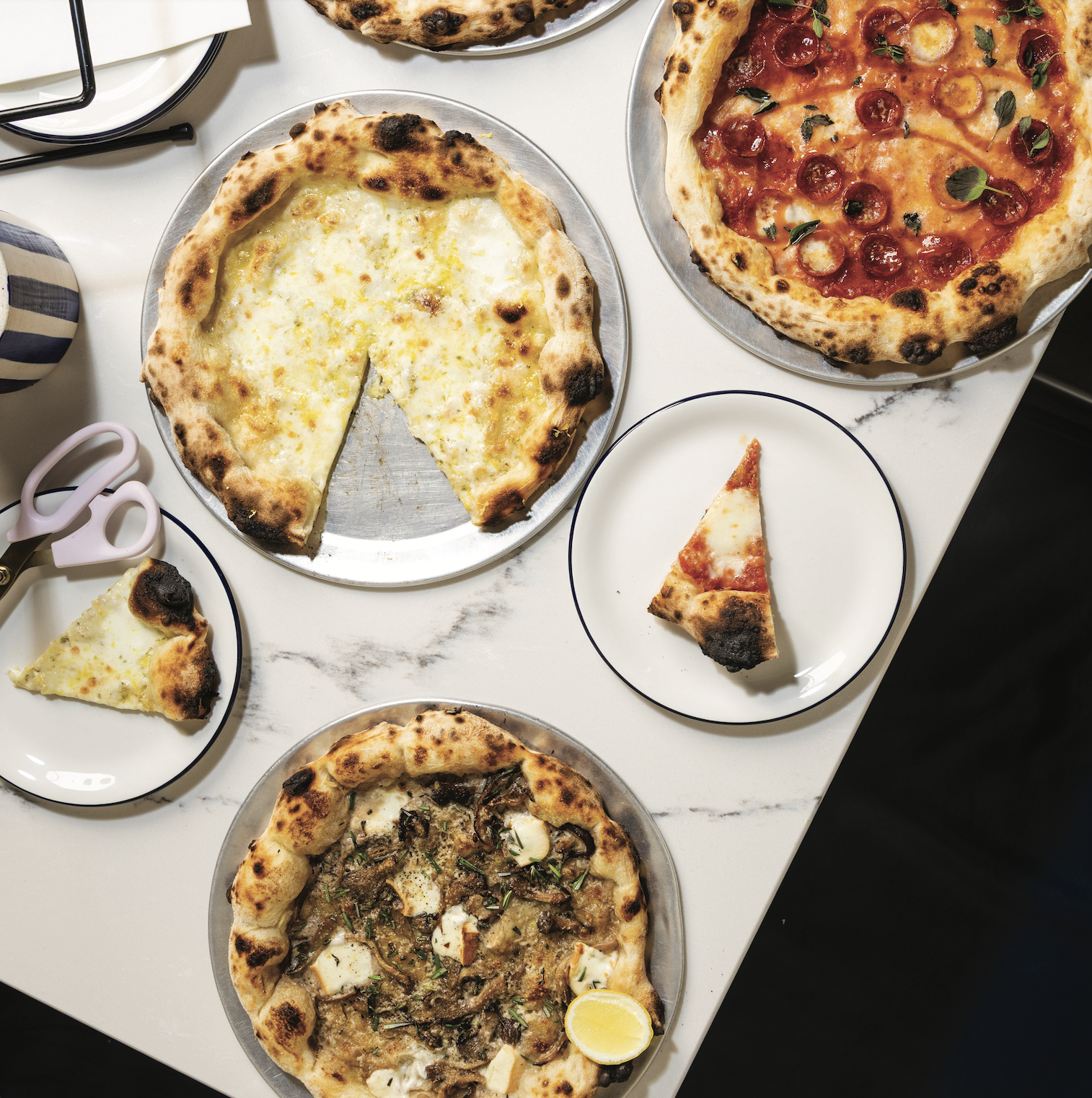
Craft wood-fired pizzas at Sho Pizza Bar; photograph by Elizabeth Wiseman.
Discipline, Translated Through Dough
From the street, Sho looks like your neighborhood pizza bar—music up, cocktails flowing, the glow of a wood-fired oven pulling people in. But behind that casual warmth lies an obsession. Chef Sean Brock spent years honing a dough that borders on transcendence. The inspiration didn’t come from Naples or New York, but from a tiny counter in Tokyo.
“I watched this guy make a pizza and had never seen somebody be so intense about something so ordinary,” Brock says. “Then I ate the pizza, and it still haunts my dreams.”
That moment followed him home. “I have always been so blown away by finding shiso growing wild in Tennessee, and once I saw pokeweed growing in the middle of the street in Tokyo,” he says. “These things feel like a natural link between the two places to me.” The parallels run deeper than plants or geography. “Much like the South, people in Japan are raised with morals centered on what is best for the community and not the individual.”
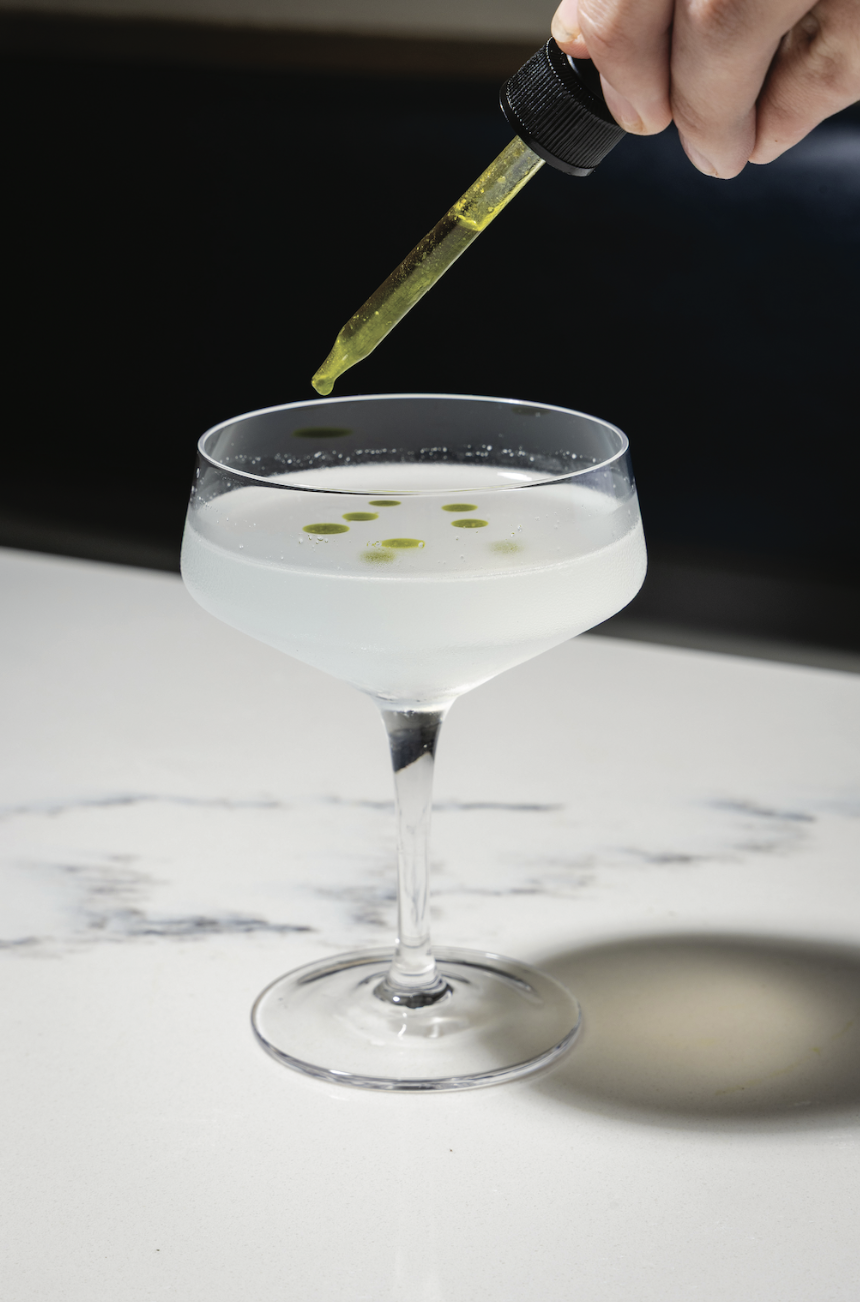
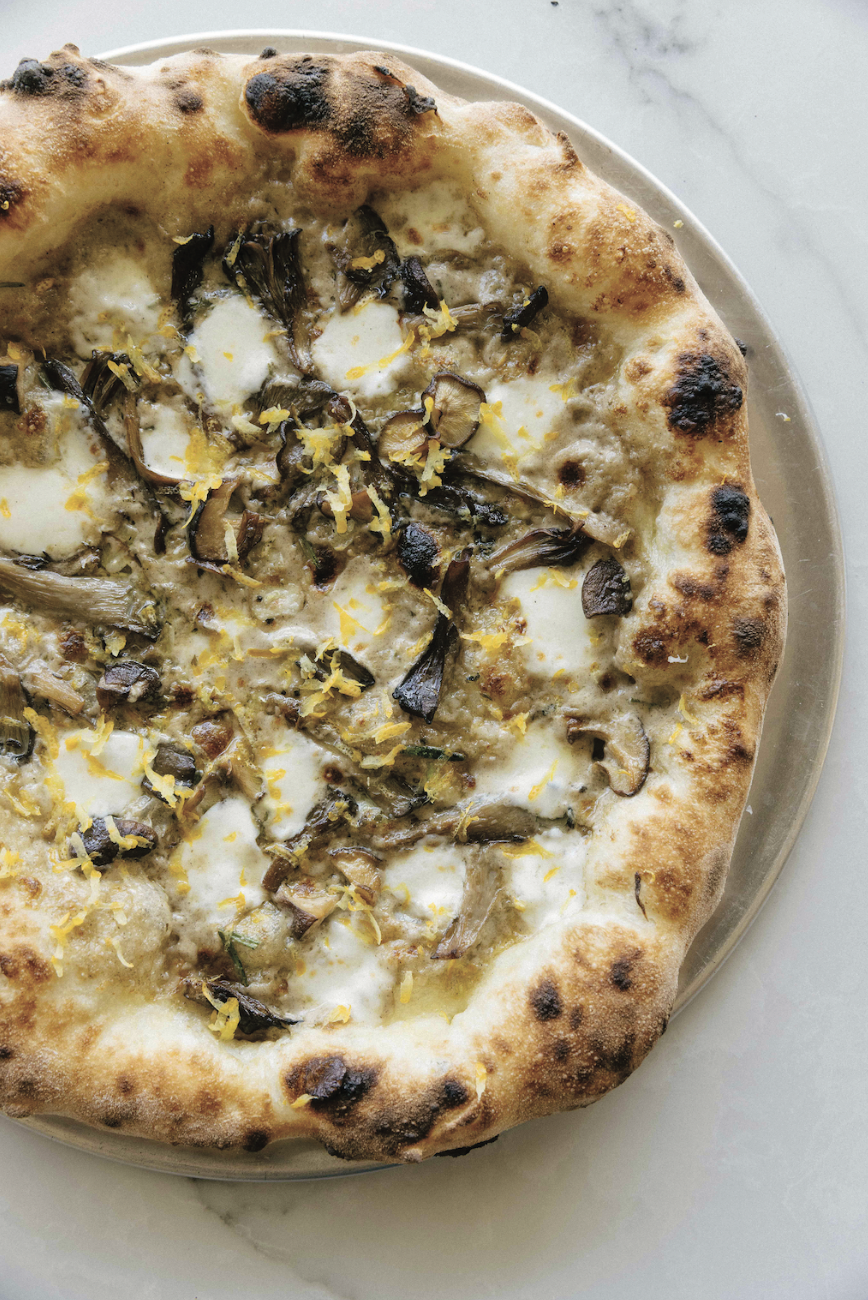
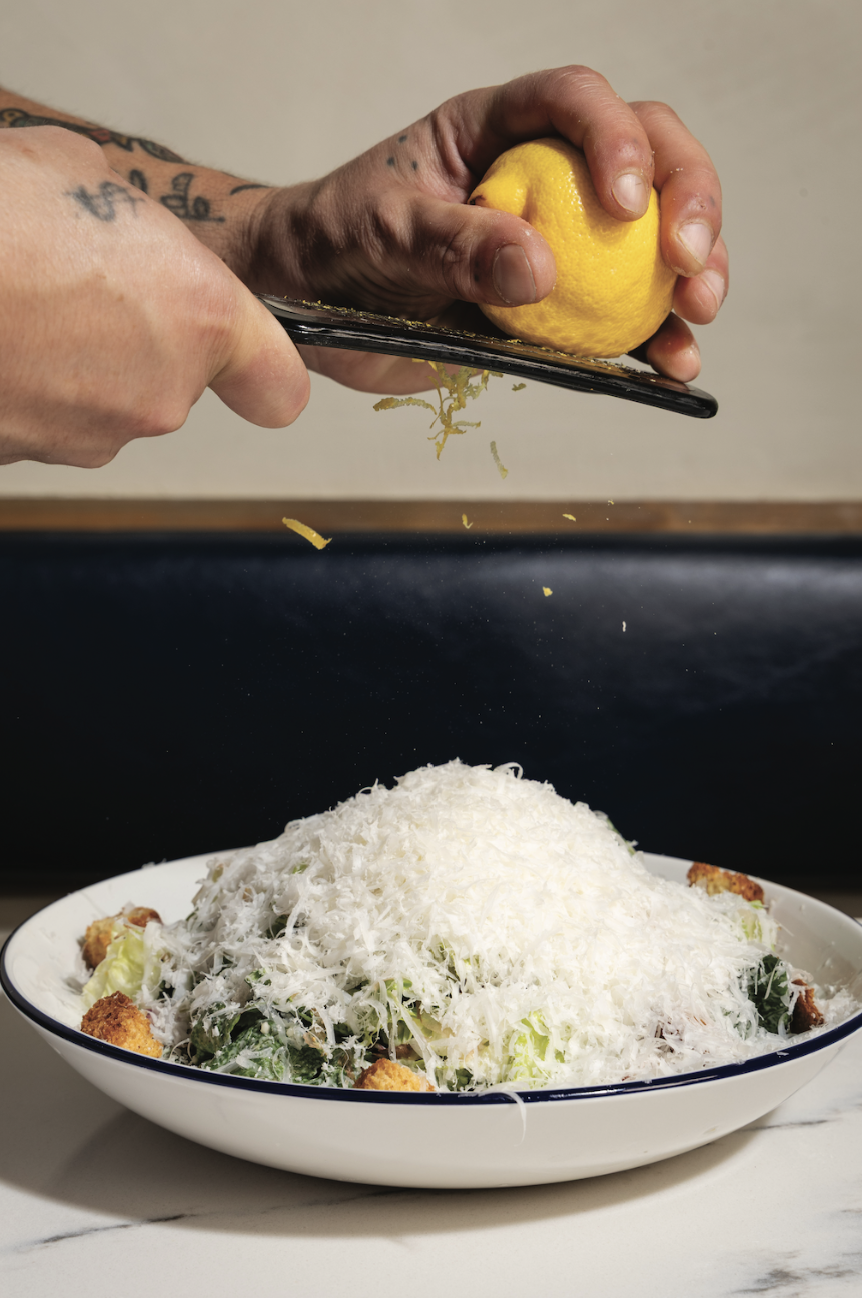
Sho pizza bar has a carefully crafted cocktail menu in addition to it’s wood-fired pizza; photography by elizabeth wiseman.
At Sho, Brock wanted to capture that spirit of connection. “We wanted to make sure that Sho felt like you were seated around the pizza maker, seeing the work that goes into crafting each pizza, the way we observe and interact with the sushi chef when enjoying omakase,” he says. “I have always felt that when you watch someone make something with their hands and they hand it to you to enjoy, I instantly have a different amount of respect for it through the human connection. I notice every time I go to Japan how small every restaurant is and how much more personal it feels. Having an open kitchen is very important to me, and I first felt that in Japan.”
Sho’s crust is a quiet act of discipline—a 72-hour fermentation in a temperature-controlled “dough room,” Italian flour kissed by Tennessee hickory and oak. “We’re chasing light-as-air crust,” Brock says. “And let’s not forget the legendary salt punch. It caramelizes and is the first thing that hits your tongue. The initial contact opens up your palate to experience all the ingredients on a more amplified level.”
“These things feel like a natural link between the two places to me. Much like the South, people in Japan are raised with morals centered on what is best for the community and not the individual.”
Brock, long known for food that honors memory and preservation, brings that value to pizza. “To me, it’s important to know where the ingredients come from, who nurtures them, what the origin story is, and how that narrative fits into the overall storytelling of my cooking,” he says. The counter offers a front-row seat to the dance of dough and flame, the hum of the bar underscoring the rhythm. Sho isn’t just a pizza bar—it’s a study in repetition and reverence, of Southern hospitality refracted through Japanese precision.
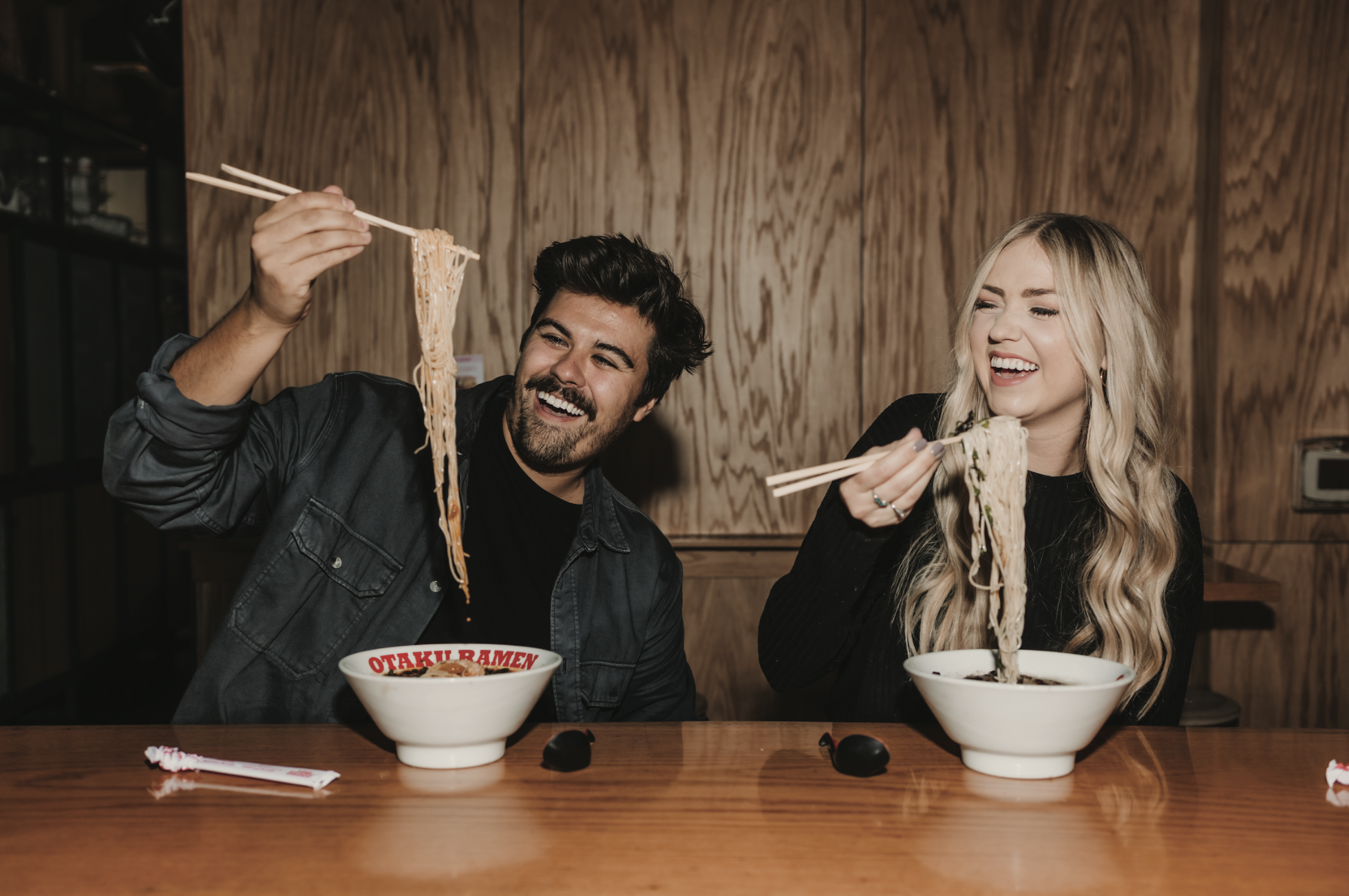
After three years as a pop-up, Otaku Ramen opened in The Gulch in 2015; photograph courtesy of Otaku Ramen.
Patience, Seasoned Over Time
Sarah Gavigan, founder of Otaku Ramen, missed deep, soulful bowls of ramen when she and her husband traded L.A. for Nashville. “I knew I was onto my next weird, wild adventure when I found myself boiling 50 pounds of pork bone broth in my backyard at 2 a.m.”
That backyard experiment became Nashville’s first dedicated ramen shop. After three years as a pop-up, Otaku Ramen opened in The Gulch in 2015. “It took me five years to understand the science and a couple more to really hone in on matching our diner’s palate,” she says. “But, if tonkotsu ramen is made from pork bones, I’m in the middle of some of the best pig farms in the world. I bet I could make some damn good tonkotsu—and I was right.”
“Izakaya’ is to Japan what ‘trattoria’ is to Italy, what ‘bistro’ is to France, what ‘pub’ is to England,” she says. “It’s the everyday place people go—and that’s the food and energy that really inspires me.”
Gavigan found another connection. “Ramen is habitual, the same way barbecue is habitual. True Southerners will sit around and argue about which barbecue place is better. But there’s no better, really. You love what you eat the most. That’s where our food cultures come together, in this habitual routine of food.”
That link takes shape in dishes like her hot chicken bun. “The chicken is made in Japanese-style, karaage [fried]. If you think about hot chicken, it’s sitting on white bread. When you look at a bao bun, it’s steamed white bread,” she says. “The spice is made with dehydrated, pulverized bluegrass soy sauce cured in bourbon barrels in Kentucky. If you’re really paying attention, you can get the bourbon barrel right on the outside. To me, that’s honoring their culture, honoring our culture, and bringing something together.”
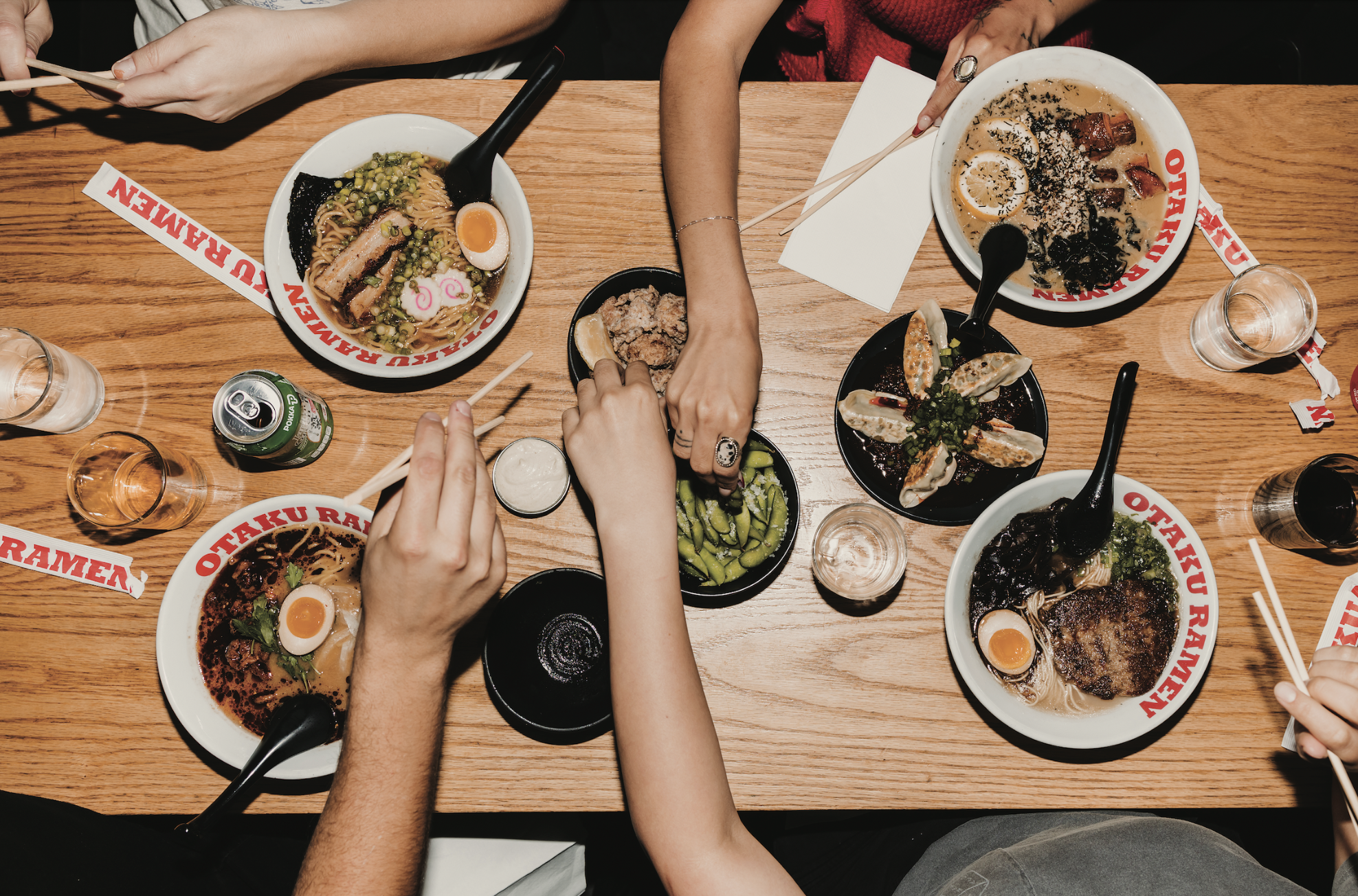
Photograph courtesy of Otaku Ramen.
Over 15 years, ramen has become her medium for cultural empathy. She still travels to Japan annually, leading culinary tours focused on izakaya and ramen. “‘Izakaya’ is to Japan what ‘trattoria’ is to Italy, what ‘bistro’ is to France, what ‘pub’ is to England,” she says. “It’s the everyday place people go—and that’s the food and energy that really inspires me. I’m American, I want to be loud, I want to laugh, I want to drink. I want to feel the joy of a place.”
And while she considers herself a steward, she’s still a student. “I feel a responsibility to understand their culture in much more than a consumptive way,” she says. “Not just making ramen, but truly learning about a different culture has, in many ways, made me a better person.”
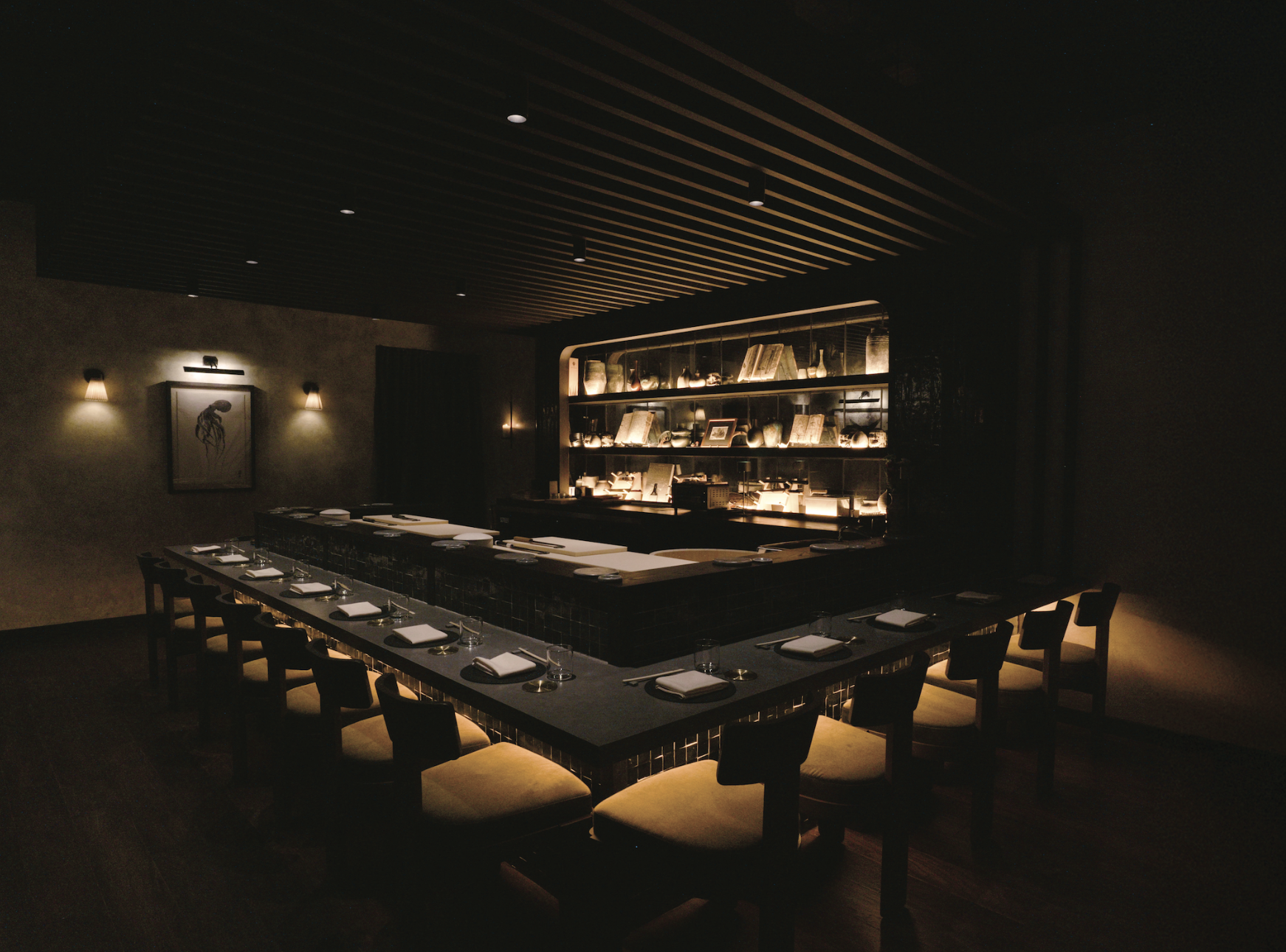
Kase x Noko’s 14-seat omakase sushi bar; photograph by Mick Jacob.
Grace, Measured in Every Detail
In East Nashville, Kase x Noko’s 14-seat omakase sushi bar and four-seat Japanese cocktail bar serve a 14-course tasting menu at an affordable price. “I’ve spent a good bit of time in Japan,” says founder Jon Murray. “Japan and Nashville both share a deep respect for ingredients and tradition. In Japan, there’s mindfulness, preparation, harmony in flavors. In Nashville, food is deeply tied to community. Both cultures value coming to a table and celebrating together.”
That same care guides the omakase. “Chef created his own rice vinegar,” he explains. “You have to be soft with the rice, not aggressive. The rice’s temperature matters as much as the fish. There’s a fine balance; it shouldn’t be cold, and it shouldn’t be hot.”
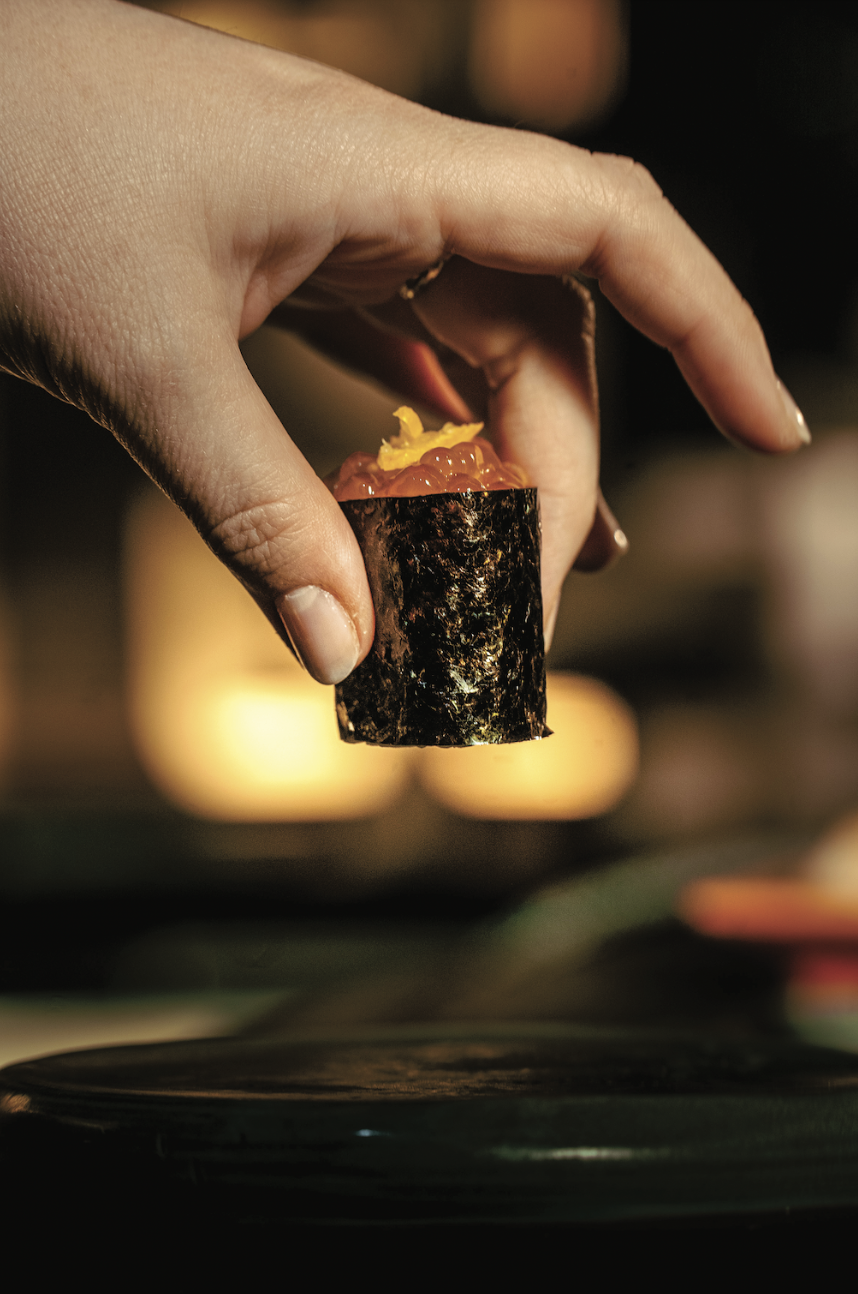
Kase x Noko brings Japan’s reverence for ingredients to Nashville; photograph by Mick Jacob.
Still, Kase x Noko adapts tradition for Nashville. “In Japan, it’s about the rice, the fish, the pure ingredients. But here, you have to marry that tradition with something approachable,” he says. “Our toro toro bite does that—it’s medium fatty tuna topped with pickled wasabi. You still taste the fish, but the wasabi rounds it out for a Nashville diner.”
Design follows the same philosophy. The room glows with warm woods and low light, scored by a ’90s R&B and hip-hop playlist, but hospitality grounds it all. “Our servers get down on their knees to talk eye-level,” Murray says. “They learn everything—sake, prefectures, fun facts—so guests can relax. Sake and sushi can be intimidating, but people feel taken care of when you know your stuff.”
Drinks carry the same spirit of range and refinement. “We’ve got a pretty extensive Japanese whiskey list, from $8 an ounce to $500,” Murray says. “Our servers curate a one-size-fits-one experience.”
And behind it all is a single word that guides the team. “Omotenashi—I love that word,” says Murray. “It’s selfless hospitality, doing something for someone without expecting anything in return. That’s what hospitality is. That’s what love is.” V
Find out more about these Nashville restaurants, where Japan meets the South, at shopizzabar.com; otakuramen.com; and kasexnoko.com.
This story appears in our Winter 2026 issue.