
Goodwill Hunting
Chef Katie Button reflects on her experiences shoring up her community during challenging times
By M. Linda Lee
Restaurants, Katie Button believes, function as community centers. “[Restaurants] are this intersection between the general public that dine at our places, plus our staff, plus the farmers we source from,” says the chef and founder of Cúrate Bar de Tapas in Asheville, North Carolina.
She would know. At age 24, Katie put her master’s degree in biomedical engineering on the back burner in favor of a culinary career, then proceeded to sharpen her skills in the kitchens of some of the world’s best chefs, notably Ferran Adrià (of world-renowned El Bulli in Roses, Spain, which closed in 2011) and José Andrés. In 2022, Cúrate, the restaurant she runs with her business partner and ex-husband, Felix Meana, won a James Beard Award for Outstanding Hospitality.
Reflecting on the hurricane that ravaged Western North Carolina in late September 2024 and the wildfires that consumed whole neighborhoods in Los Angeles, Katie is struck by how vital the restaurant industry is to a community. As low-profit-margin businesses, every dollar they take in goes back out to local workers, farmers, and suppliers, she points out. “When we have to close or we fail, the ripple effect through our community is enormous.”
That’s why she feels so strongly about advocating for independent restaurants and caring for her community. Her motivation to give back is embedded in the reason she’s in the hospitality industry in the first place: “because we love to take care of people.” “For a business, [giving back] makes you feel valuable, like you’re a part of something. And I love that,” she says.
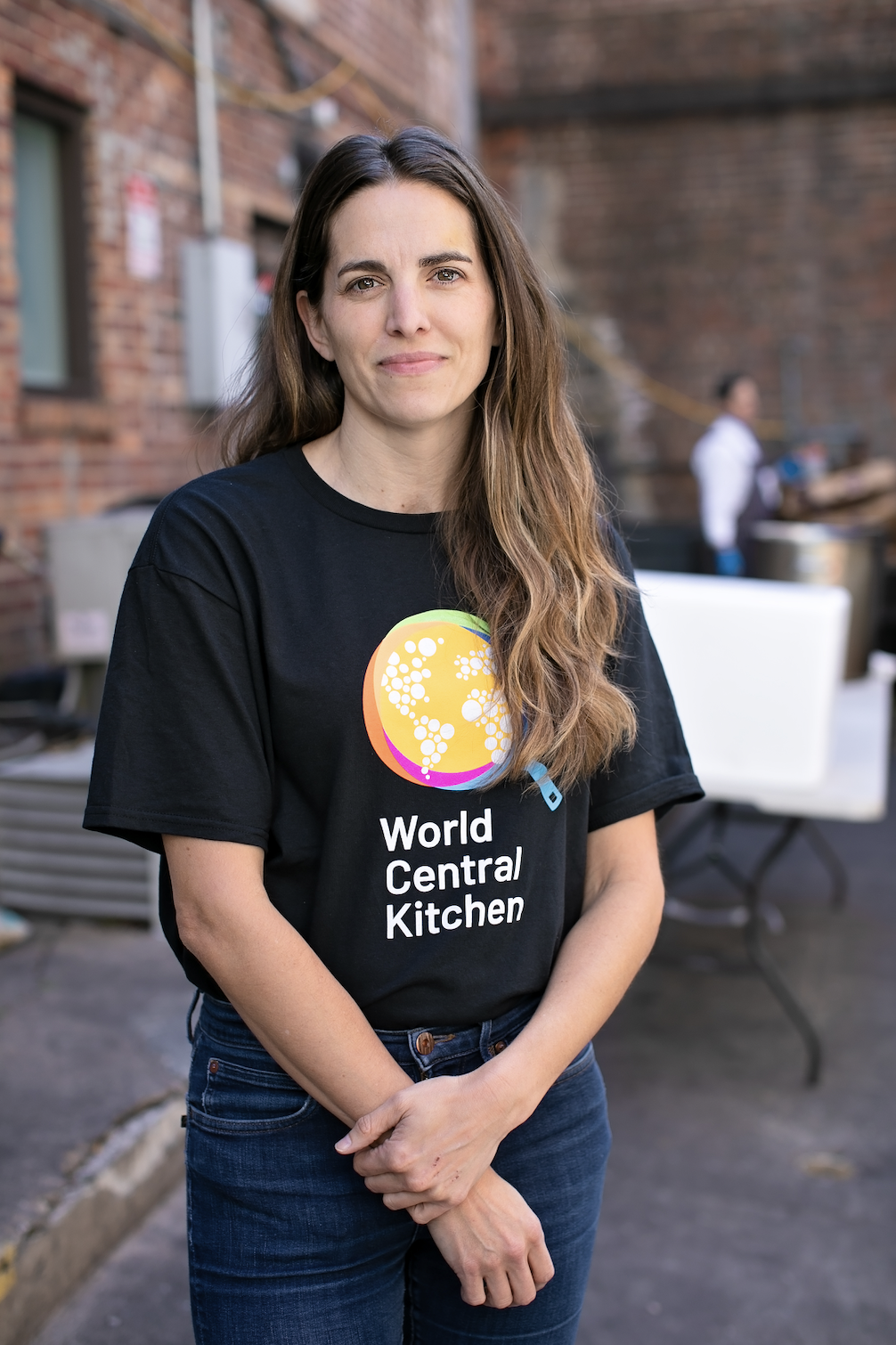
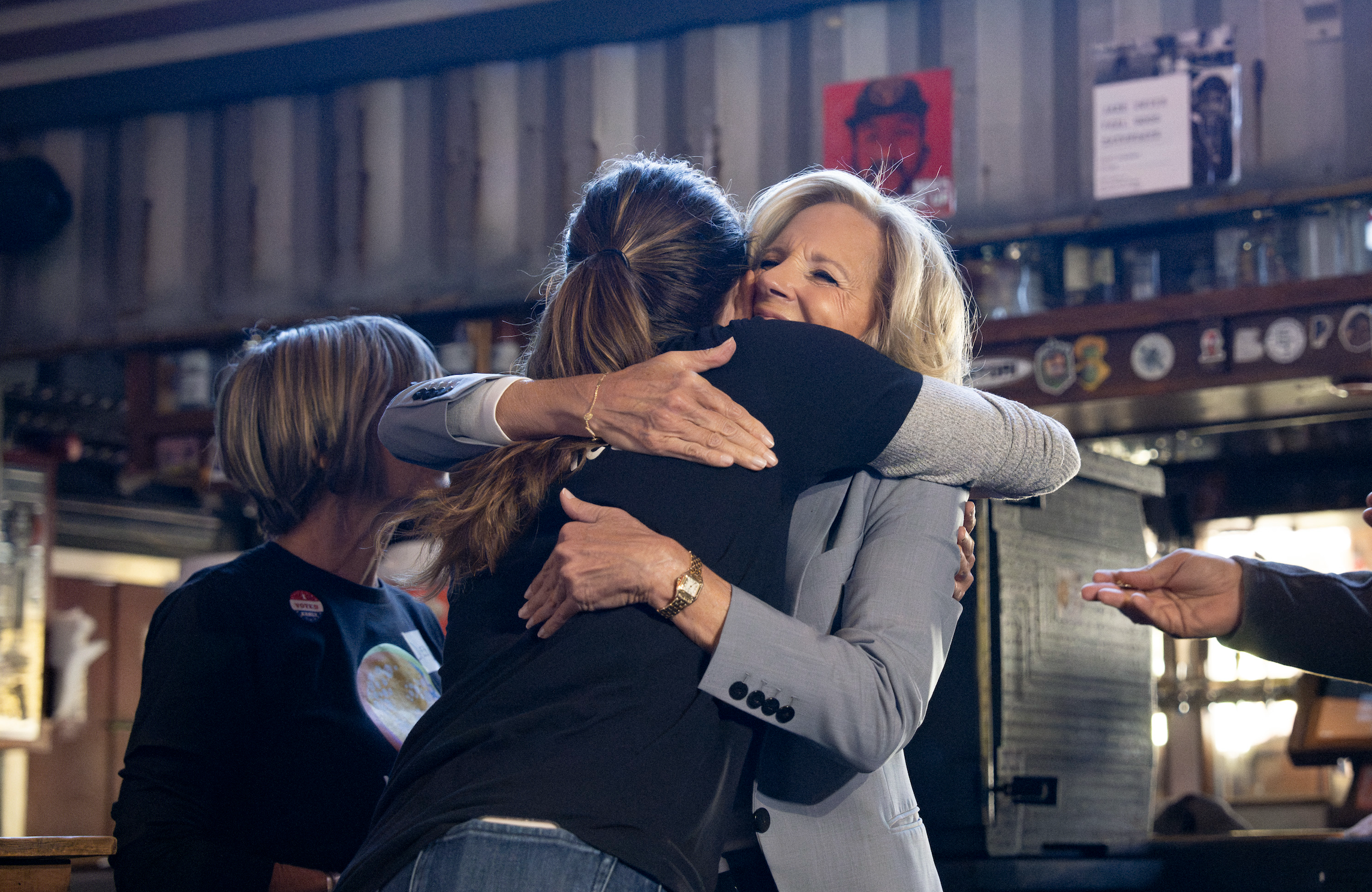
Chef Katie Button and her restaurant, Cúrate, collaborated with World Central Kitchen and national leaders such as Dr. Jill Biden (right) to feed thousands of WNC residents in the wake of Hurricane Helene; photography courtesy of Katie Button.
Hurricane Helene hit Asheville on a Friday, and on Saturday, Katie got a call from World Central Kitchen (WCK), the nonprofit founded by Chef José Andrés to provide fresh meals to people in response to crises. Since Cúrate had power—but no water—WCK asked if the restaurant could help them make meals for the stricken community as quickly as the next day. “We started slowly with just a couple hundred meals because that was all we could do,” the chef recalls, “and we built up to doing over 1,000 meals a day.”
“What drives me now is being able to make a difference.”
To facilitate that effort, World Central Kitchen trucked in a tank of clean water to station behind the restaurant. As one of WCK’s satellite kitchens in Asheville, Cúrate produced meals for several weeks and ended up making some 20,000 meals before the restaurant reopened a month after the storm.
Similarly, during COVID, Cúrate not only worked with WCK to feed members of the community who had lost their jobs, but Katie was a founding member of the Independent Restaurant Coalition, which lobbied local, state, and federal lawmakers for financial relief. To address the lack of aid for small independent restaurants after a natural disaster, Katie now serves on Governor Josh Stein’s Task Force to Rebuild North Carolina. “My role is to express the dire and urgent need of businesses and to be the conduit of what they’re experiencing and what they need,” she says.
“Dividing and conquering” with Felix, the award-winning chef, cookbook author, and media personality oversees Cúrate, an online marketplace, a wine club, and a tour company, while also caring for their two children. Along with all the balls she already has in the air, Katie is working on her second cookbook and expanding Cúrate’s charcuterie offerings for wholesale.
“What drives me now is being able to make a difference,” says the chef, who uses her platform and affinity for public speaking to share a message that could positively impact the restaurant industry. “That’s really what I’m passionate about,” Katie says. “Those are the best moments.” V
Cúrate, 13 Biltmore Ave, Asheville, NC, curatetapasbar.com; La Bodega, 32 S Lexington Ave, Asheville, NC; labodegabycurate.com
This story appears in our Spring 2025 issue.
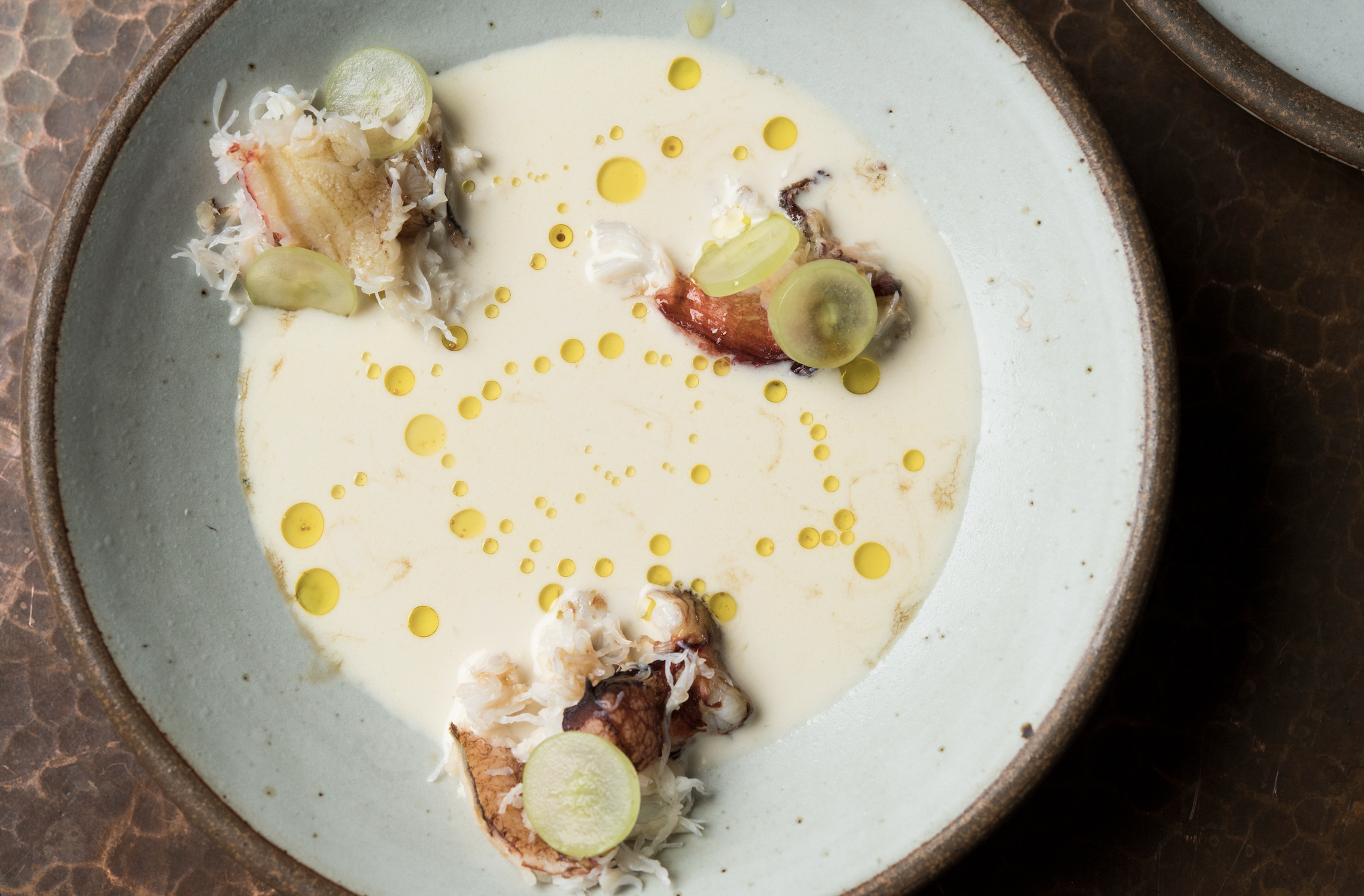
Ajo Blanco, a signature dish by Chef Katie Button; photograph courtesy of Katie Button
Ajo Blanco
(Cold Almond Soup with Crab and Green Grape Granita)
From Chef Katie Button
Serves 4–6
Raw Almond Milk
4 cups raw skin-on conventional almonds
Water
In food processor, pulse almonds until broken apart, but not a powder. Cover with water and let sit overnight in the refrigerator. The next day, blend almonds in batches, using the soaking water so that enough water is added to allow each batch to blend smoothly (you may need to add more water to the soaking liquid). Pass through very fine mesh strainer such as a bouillon strainer, using a rubber spatula to guide almond milk through the strainer; do not press too hard or try to get all of the liquid out, as this will push through too much of the almond pulp. Push until almond pulp starts to pull away from inside of strainer, then discard the pulp.
Ajo Blanco
4 cups raw almond milk
½ clove garlic, peeled
¼ cup extra virgin olive oil
2 Tbsp. reserve sherry vinegar
Kosher salt to taste
In even batches, blend everything thoroughly in blender, adding the oil little by little while the motor is running. Add kosher salt to taste. Chill thoroughly; the soup must be served cold.
Steamed Crab
2 live Dungeness crabs (can substitute live blue crabs or fresh lump crabmeat)
Fill a large pot with 3 to 4 inches of water. Place a steamer rack inside the pot. Bring the water to a boil over high heat. Using tongs, put the crabs into the pot and cover with a tight-fitting lid. Steam for about 20–25 minutes until shells are bright red. Using tongs, remove the crab to a colander and rinse under cold water until cold enough to handle. Pick the crab clean, reserving the crab meat. Sort back through the picked crab meat to be sure that all of the shell pieces were removed.
(If using fresh crabmeat, no cooking is necessary; just pick through it to remove any pieces of shell.)
Green Grape Granizado
1 bunch of green grapes
1 tsp. lemon juice
Wash and remove green grapes from stems, discarding any rotten grapes. Press grapes through juicer into a container with about 1 teaspoon of lemon juice. After all grapes are juiced, taste the juice. Pour into a shallow metal container and freeze. Once frozen solid, use a fork to scrape up the frozen juice to create a fluffy, icy texture; then return to freezer until ready to serve soup.
PX Reduction
1 bottle Nectar Pedro Ximenez wine
60g granulated sugar
Bring wine and sugar to a boil in a saucepan, reduce until just barely thickened. For this dish, the PX reduction should pour easily when cold. If it is over-reduced, simply add hot water and mix thoroughly to thin it out. (If it is too syrupy, your spoon sticks to the bottom of the bowl and it’s unpleasant.)
Plating
Pour cold Ajo Blanco into a pitcher. In bottom of soup bowls, add the PX reduction and grape granizado and fresh steamed crab with a little Maldon salt and extra virgin olive oil. Serve the bowls in front of the guests and pour the soup tableside.