
Flight Path
The team at Wonderbird Spirits crafts award-winning gin in a small Mississippi town
By Blair Knobel
The bird has a long mythology. Wings outstretched, floating above the clouds, it represents freedom; a rising phoenix from the ashes signifies rebirth; and a bird in a cage? Trapped but trilling—much like creativity. Even when it’s stifled, it finds a way to sing.
Such was the case for Chand Harlow and his business partners, Thomas Alexander and Rob Forster, before launching their award-winning grain-to-glass distillery, Wonderbird. The three friends were in corporate careers. Harlow was living in New York City, working hard in finance, yet dreaming of breaking into the food-and-bev industry. At the time, he was haunting bourbon distilleries and thought that distilling could be a fulfilling pivot.
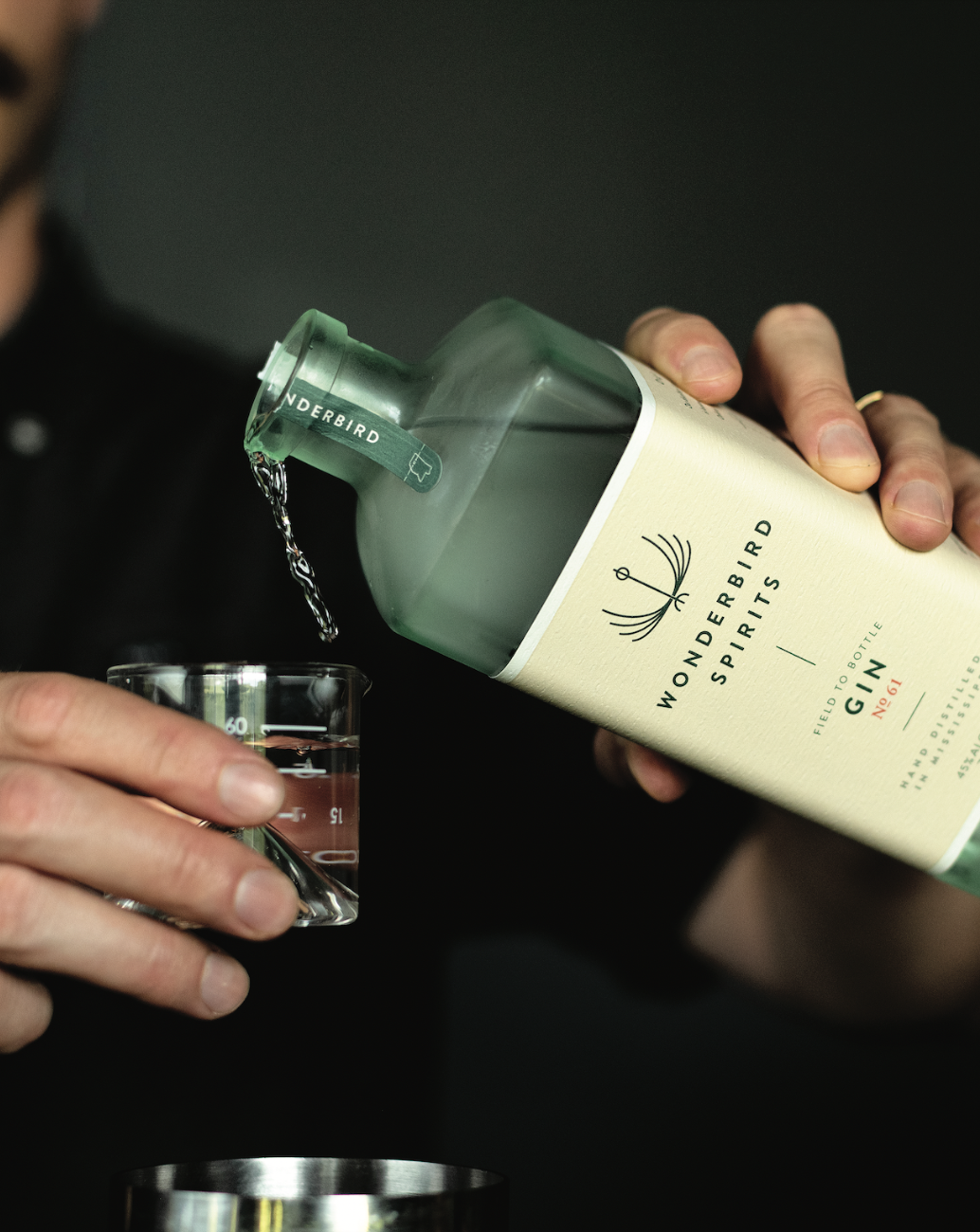
The team at Wonderbird crafts field-to-bottle gin utilizing local Mississippi rice; photograph courtesy of Wonderbird Spirits
Fast-forward a few years, Harlow moved back to his native Mississippi and settled in Taylor, a quaint town near the literary and collegiate haven of Oxford, to push full bore on his dream. Changing course from bourbon, Chand and his partners decided to focus on gin. “I’ve been into gin since I was a young person; I was exposed early,” Harlow says. “[With gin], you can be as creative as you want to be and express the terroir.” He notes that while gin has traditionally been a minor player in the spirits market, it has been exploding around the globe.
Leaning into an international vision, Wonderbird’s founders opted for an unorthodox base—culinary-grade rice, the grain for sake. They wanted to utilize Mississippi agriculture in their field-driven product; after experimenting with several rice varieties from nearby Two Brooks Farm—including red, black, and basmati—the distillers decided on jasmine as their favorite.

In 2019, Chand Harlow, together with friends and business partners Thomas Alexander and Rob Forster, set out to make a world-class gin at Wonderbird Spirits; photograph courtesy of Wonderbird Spirits
To make their sake-style gin, the team uses koji, a fermenting agent, to give their base a nuanced flavor, and then adds foraged and thoughtfully sourced botanicals. Harlow notes that red clover, loblolly pine needles, and magnolia blossoms are procured locally, while other ingredients such as Meyer lemons come from farther afield.
What comes from this meeting of artistry, intentionality, and science? A damn fine bottle of gin. The team is hands-on from start to finish, even personally labeling each bottle. Wonderbird currently offers three varieties: Wonderbird Dry Gin, Gin No. 61, and Gin No. 97 Magnolia Experimental. They have recently sold out of their Cask Finished Gin No. 61 - Batch 4.
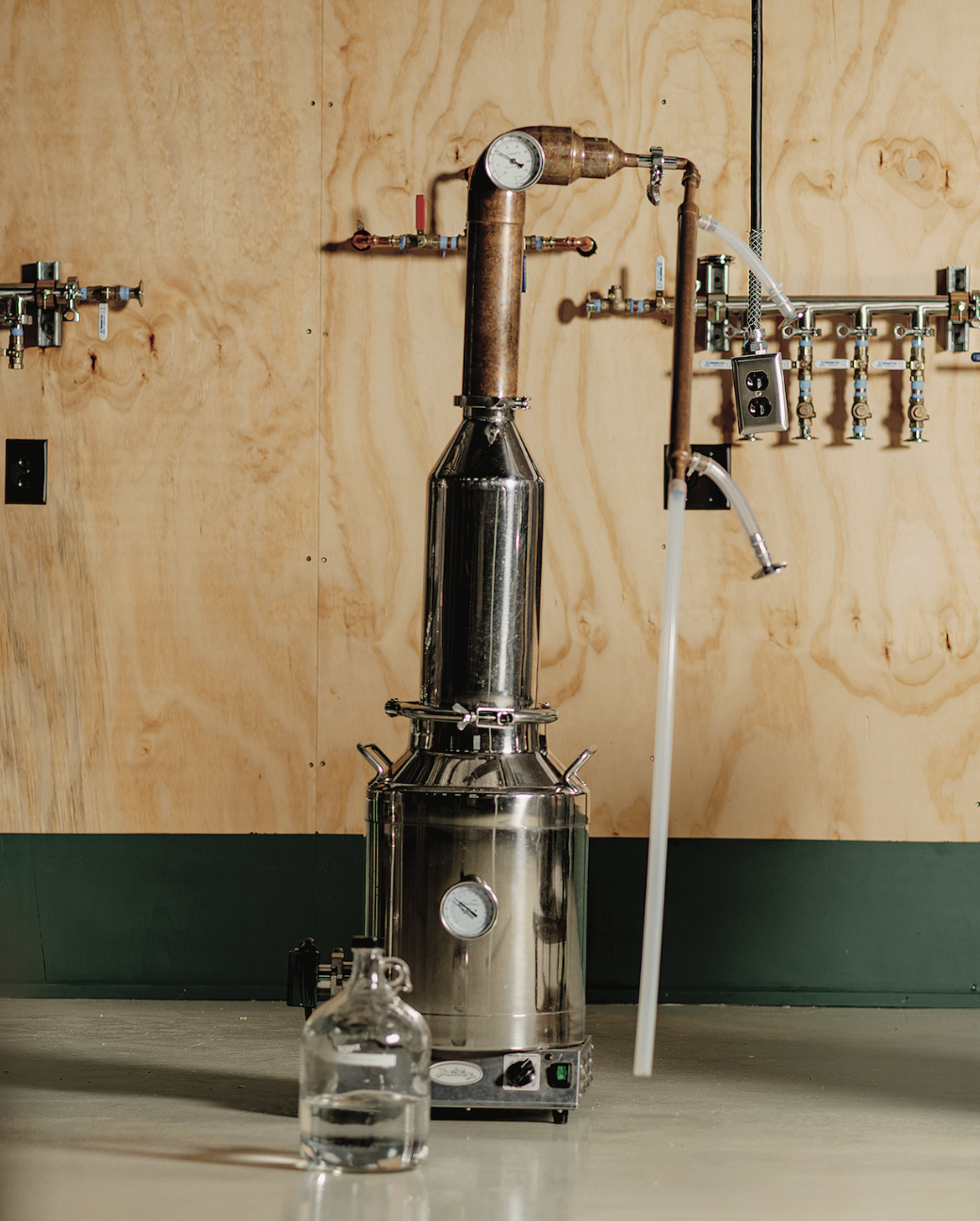
Visit Wonderbird Spirits Tasting Room to sample each of their bottles, and on Thursday evenings enjoy craft cocktails featuring their gin; photograph courtesy of Wonderbird Spirits
And the name? Harlow says that the team floated several options before taking a breather to decide. Rob and Thomas were both looking into ornithology for name inspiration, and one day Rob blurted out, “Wonderbird.” Harlow says it immediately resonated, considering the path that each took to pursue their dream. It also reflects the spirits they make—a symbol of creativity, heart, and soul. V
Wonderbird Spirits, 618 County Road 303, Taylor, MS; wonderbirdspirits.com
This story appears in our Fall 2025 issue.