
String Theory
The Earl Scruggs Music Festival transforms the Tryon International Equestrian Center into a bluegrass mecca
BY Blair Knobel
A weekend at the Earl Scruggs Music Festival is like a baptism in bluegrass. I’d been a fan of the genre for years—the twangy banjo, the melodic mandolin, the lonesome vocal—but had never been to a festival devoted to the sound. Last year, at the Tryon International Equestrian Center, in Mill Spring, North Carolina, I tucked in for a long Labor Day weekend of music, Appalachian culture, and a premier setting to immerse myself in the language of bluegrass.
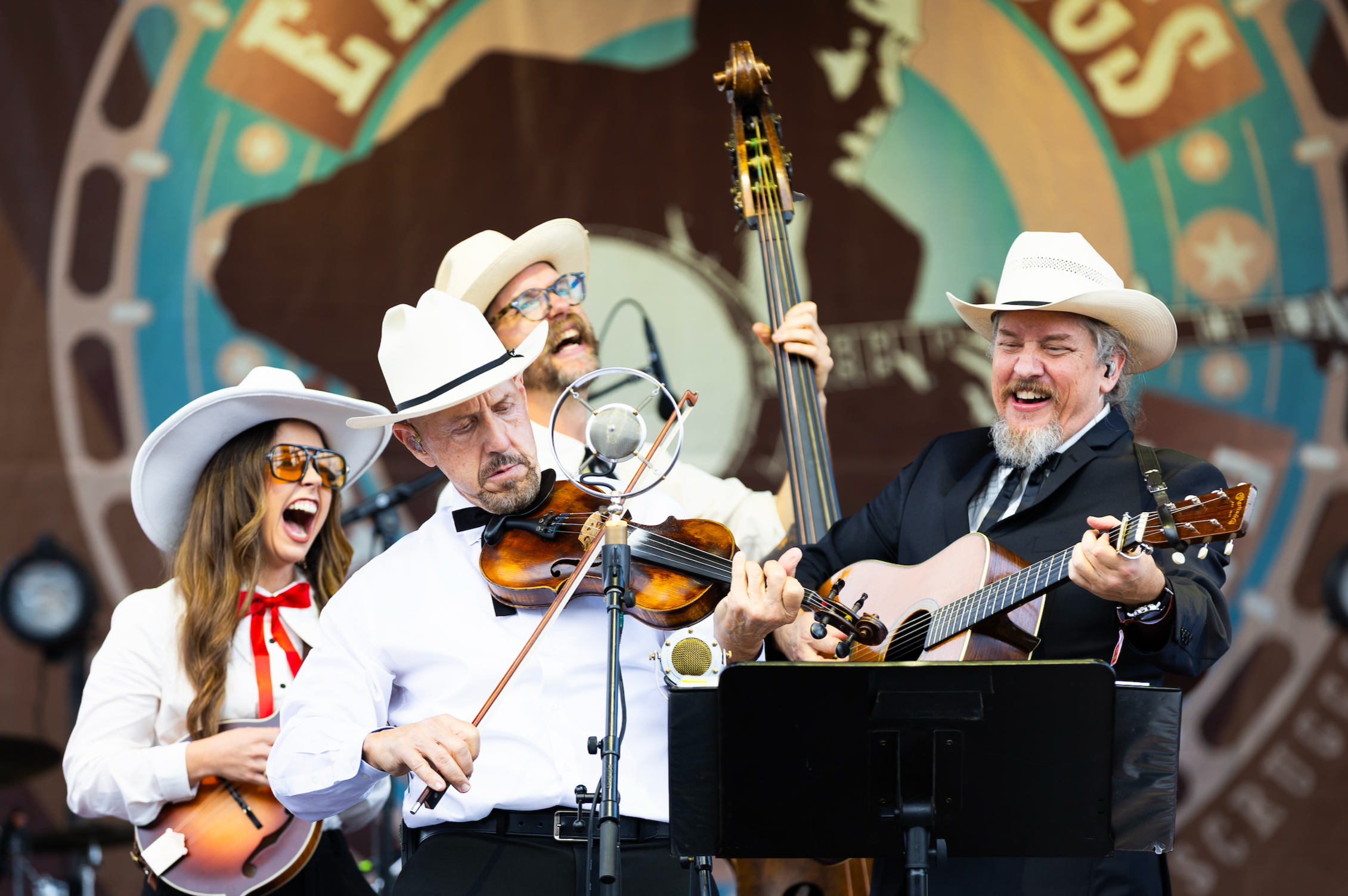
Grammy nominee Sierra Hull jams with The Earls of Leicester; photograph by Cora Wagoner.
The spirit of the festival is steeped in Appalachian sound, a plaintive, string-fueled genre born of hardship and joy, of vocals that tug at the heartstrings. It pays homage to Earl Scruggs, the banjo savant from the Flint Hill community of North Carolina, who at only 10 years old in 1934, created the forward-rolling, three-finger picking style that forever changed five-string-banjo playing. Scruggs had an illustrious career, forming the popular duo Flatt & Scruggs along with Lester Flatt and collaborating with a range of musicians and musical genres over the years. He was inducted into the Country Music Hall of Fame in 1985 and the Bluegrass Hall of Fame in 1991, among other accolades he received before his death in 2012.
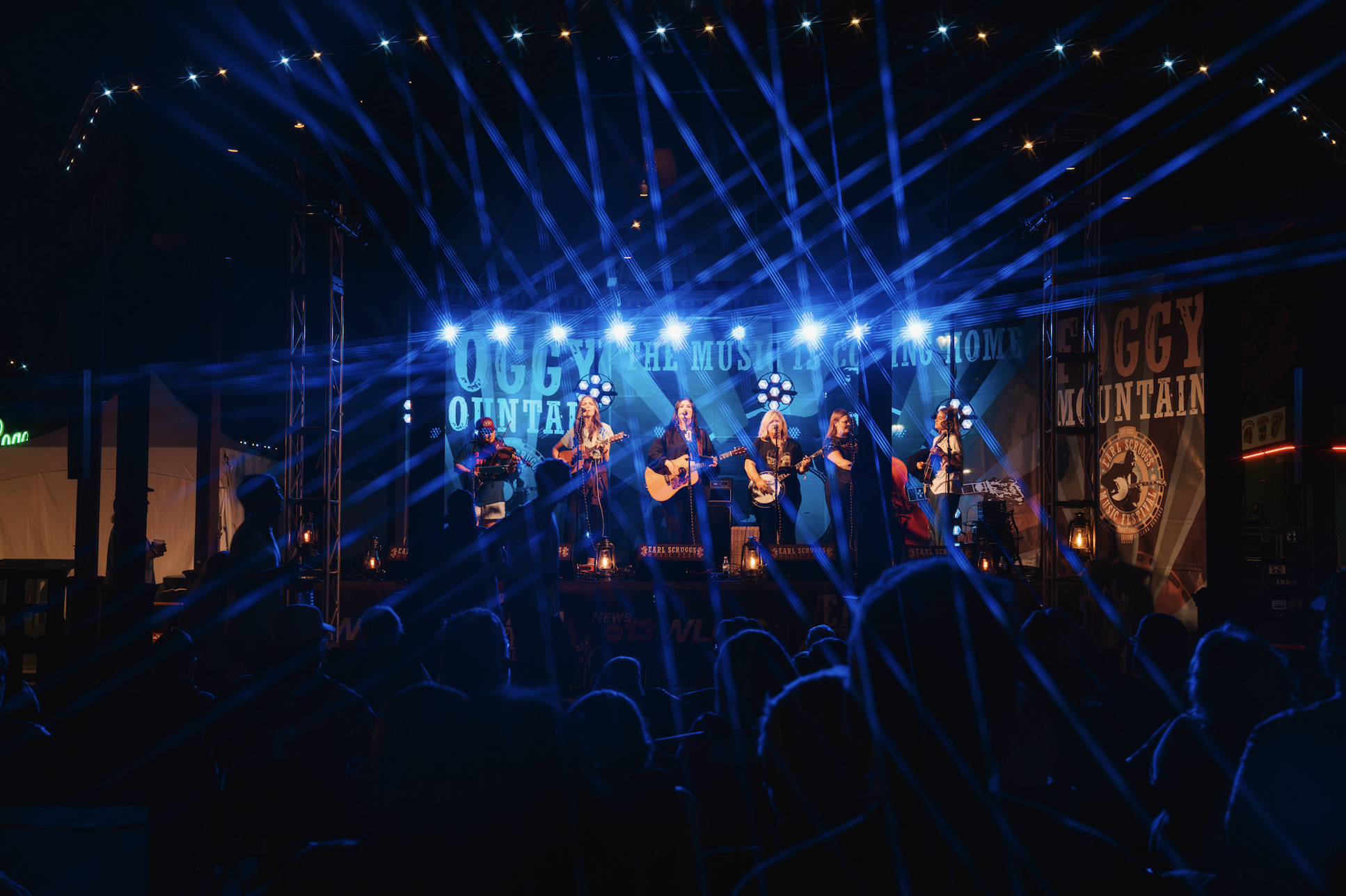
Chart-topping all-female bluegrass band Sister Sadie was just one of the headliners that graced the festival's Foggy Mountain Stage last year; photograph by Joeleen Hubbard.
The festival is an extension of the music that Scruggs championed—a cultural soundtrack for the Blue Ridge. It attracts wide-ranging acts such as The Avett Brothers, The War & Treaty, and Watchhouse, along with more genre-leaning ones like the Del McCoury Band and Alison Krauss & Union Station. While the festival reflects the genre's American roots traditions, it also interweaves elements of jazz, indie folk, and soul—a nod to bluegrass's contemporary trajectory.
Beyond the music, which unfolds across five stages—as big as a grandstand and quaint as a gazebo—the festival features myriad activities, talks, and educational components reflecting the history and culture of Appalachia. From a craft expo to square dancing, guided horse tours to music lessons for youth through the Junior Appalachian Musicians program, the festival celebrates the artistry of our region.
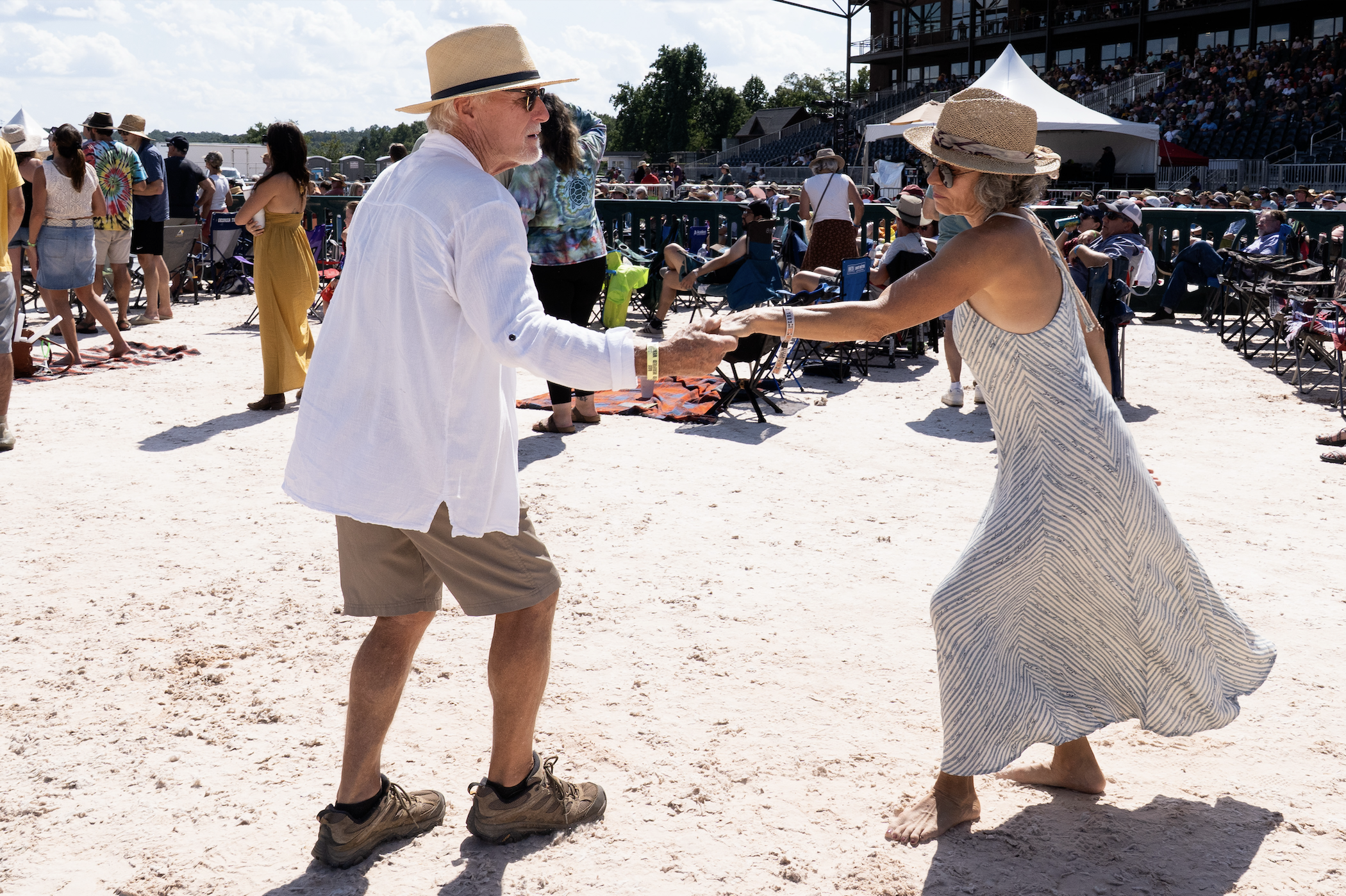
The music spurs some couples to dance; photograph by Eli Johnson.
The setting in the North Carolina foothills is part of the allure. There is a feeling to a late summer morning in the mountains. Sun on the rise, light taking hold of valley mist. Steaming cup in hand, mind groggy but awakening with each sip. As I discovered, many devotees journey from far and wide in their campers and RVs—or set up tents. The Tryon International Equestrian Center also offers one-bedroom and two-bedroom cabins, as well as the new Overmountain Lodge, for overnight attendees.
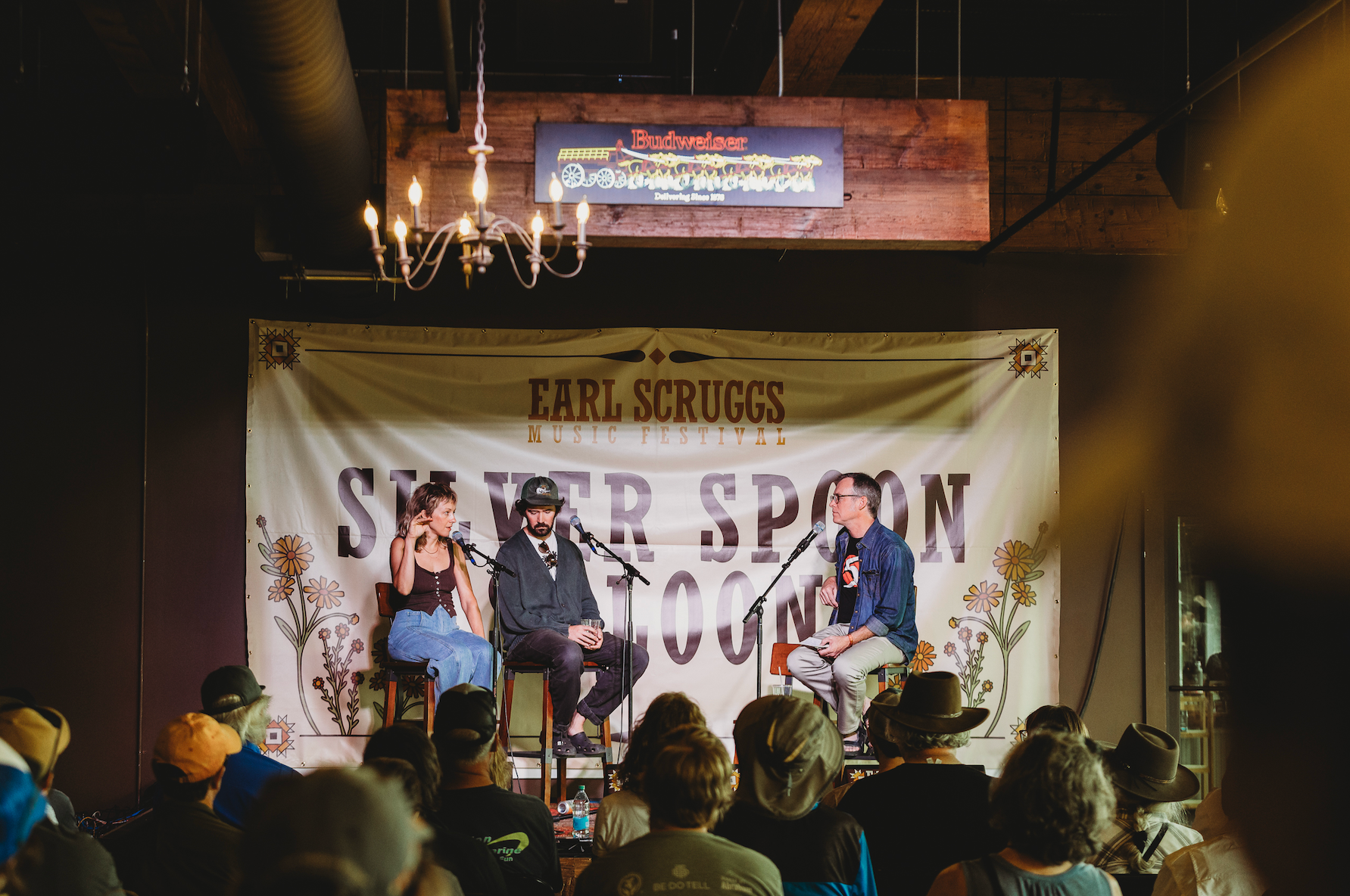
The programming at the Earl Scruggs Music Festival includes interviews and behind-the-scenes sessions with festival performers, such as Watchhouse; photograph by Cora Wagoner.
At the Earl Scruggs Music Festival, music is the means to a deeper story and continues long after the stage lights go down. Never had I experienced a festival where the patrons keep playing long after the last act. Where jam circles featuring all manner of stringed instruments are the norm— their melodies lifting toward the stars while the fire goes down. More than anything, I discoverd that bluegrass is a lineage, passed down through generations, living on through Earl Scruggs, his descendants, and his musical legacy.
Earl Scruggs Music Festival, Sept 4–6, at the Tryon International Equestrian Center, Mill Spring, NC; earlscruggsmusicfest.com
This story appears in our Summer 2026 issue.